November 24, 2020, 5 min read, by Vinicius Bastos
Which Home Automation Brand Should You Choose?
Wired or wireless system? Understand KNX, Zigbee, Z-Wave, Wi-Fi, Bluetooth and Matter and see the main home automation brands in Brazil.

If you are thinking about automating your home, you have certainly come across the question: which automation brand should I choose?
To answer that question, we will list the main automation brands available in Brazil, grouped by technology.
The first point is the topology: wired or wireless system?
Wired systems
A wired system requires the switch legs of the electrical circuits to run back to the automation panel, which is similar to an electrical panel.
This panel must be assembled by a professional, and it will house the control modules, such as relays, dimmers and input and output points for the switches.
Communication between the modules was inherited from industry. At first, the RS-485 protocol was adopted, and then dedicated standards emerged, such as KNX. Later, the TCP/IP protocol was also implemented.
Advantages
The main advantages of a wired system are centralized maintenance and the fact that communication between the modules does not suffer from interference.
Another advantage, though not a rule, is that the hardware cost can be lower, depending on the number of automated circuits.
Disadvantages
A wired installation is only possible in new construction or major renovations. The electrical changes are significant and require a specialized electrician.
A wired system usually takes longer to complete, which generally raises the labor cost.
Expanding a wired system is also more complicated; that is why the entire project must be sized at the blueprint stage.
Wireless systems
As the technologies evolved, wireless systems became as efficient as wired systems, without the need for extensive electrical changes.
Technologies that support signal repetition ("Mesh Network"), such as Zigbee, Z-Wave, Bluetooth Mesh and, more recently, Thread, make it possible to create stable, long-range networks.
The spread of Wi-Fi allowed thousands of low-cost, plug-and-play devices to reach the market, popularizing the smart home concept.
Read about the different versions of Bluetooth in this post.
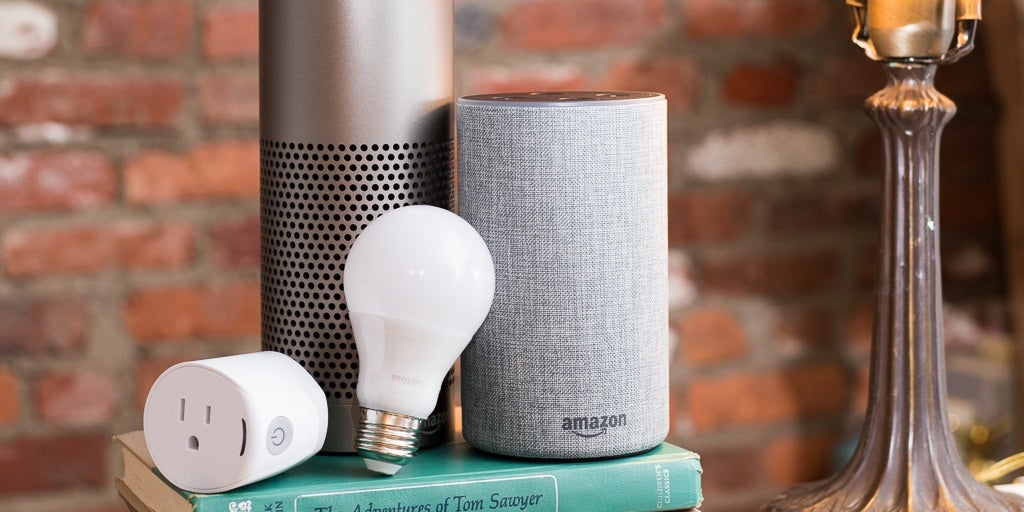
Voice assistants are quickly gaining ground and, because they are Wi-Fi, they encourage the use of wireless automation.
Advantages
Battery-powered sensors make it possible to expand what the systems can do, such as CO, gas and smoke sensors.
Door and window sensors and presence sensors, used to trigger scenes, are also popular.
Wireless modules are small and can be installed inside 4x4 or 4x2 boxes, which means practically any house can get the technology.
You can remove the automation if the property is sold, without having to redo the electrical wiring.
Another advantage is the possibility of expansion, if you prefer to automate in stages.
And finally, Wi-Fi devices cost a fraction of what wired modules cost.
Disadvantages
All wireless communication suffers from interference. This requires experience from the professional who will carry out the project.
If it is a Wi-Fi system, you need to invest in a solid network that can handle a larger number of devices.
Internet providers' routers are generally not suitable for Wi-Fi automation.
Besides the router, the cables, connectors, switches and especially the access points must be high quality and properly configured.
Another disadvantage is the variety of protocols that are incompatible with each other.
A Z-Wave device does not talk to a Zigbee one, which does not talk to a Bluetooth or Wi-Fi one.
And for Z-Wave, Zigbee or Bluetooth systems, you need to install a hub, which converts commands between the devices on the local network and the external network.
What about Matter?
Since this post was written, in 2020, the landscape has changed. In May 2021, the Zigbee Alliance was renamed the Connectivity Standards Alliance (CSA) and, in October 2022, it published version 1.0 of Matter, a standard built on technologies from Amazon, Apple, Google and other companies so that devices from different brands can work together.
Matter runs over Wi-Fi, Ethernet and Thread, a wireless mesh network. Zigbee and Z-Wave devices do not become Matter devices on their own, but they can join the system through a compatible bridge.
In practice, when choosing a brand, it is worth checking whether the product has the Matter logo or whether the brand's hub acts as that bridge: this reduces the problem of incompatible protocols and gives you more freedom to combine brands in the future. Learn more about the Matter standard and the Thread protocol.
List of Automation Brands
Although there are many brands on the international market, the brands below were the established brands available in Brazil that QA recommended when this list was updated, in November 2020.
List in alphabetical order.
Wired Automation Brands
Absolute
Control4
Crestron
Finder
Legrand
Lutron
Savant
Scenario
Schneider Electric
WOW
iNELS
2E Lighting
Wireless Automation Brands
Z-Wave
Aeotec
FIBARO
Flex Automation
LG SmartThinq
Samsung SmartThings
ZIPATO
Zigbee
Amazon Echo
Control4
Kokar
LG SmartThinq
Orvibo
Philips Hue
Samsung SmartThings
Somfy
Sonoff
Tuya
Yale
Wi-Fi
Amazon
Google
LG
Sonoff
Tuya
Xiaomi
Bluetooth
Amazon
Finder
Tuya
Xiaomi
The Tuya platform is not an automation brand, but rather the maker of the Wi-Fi, Bluetooth and Zigbee modules, and it also provides the OEM app and develops the IoT platform.
In 2020, the brands using the Tuya platform in Brazil were: AGL, Kabum, i2Go, Ekaza, Elgin, Geonav, LED Planet, Nova Digital, Steck, Positivo, Stella, Elsys, Luatek, Intelbras, Multilaser, Siemens, Schneider Electric, Sodimac, Leroy Merlin, Flex Automation, Garen, Teclastar and Philco.
Brands with proprietary protocols, without modules compatible with Bluetooth, Z-Wave or Zigbee, are not on this list.
List updated on November 24, 2020
Now that you know a bit more about the brands, find an integrator in your city: they will help you choose the right technology for your property.