November 26, 2019, 7 min read, by Vinicius Bastos
Home Tech Devices: 7 New Smart Home Technologies
Tech devices for the home: the most common ones and 7 new technologies, such as robot vacuums, phone-controlled locks, irrigation and voice assistants.
Home automation is a trend, and innovations appear all the time. Because of this, people can get confused about the technologies available and not know which ones are really worth investing in.
So, before you even start thinking about adopting a solution of this kind, the ideal is to clarify the differences between the tools and learn their main advantages. That is what we will do in this article.
Therefore, if you want to deepen your knowledge and get to know the new technologies for homes better, follow every topic in this post closely.
What are the most common tech devices at home?
The most common tech devices at home are the ones that connect to the internet and to your phone: the smart TV, the Wi-Fi router, the voice assistant, smart bulbs and plugs, cameras and the smart lock. Grouped by use, they show the types of technology that are already part of everyday life:
Connectivity: the Wi-Fi router or a mesh system, which brings the internet to every room.
Entertainment: smart TV, TV box, connected speakers and projector.
Comfort: lights, curtains and air conditioning controlled by app, by voice and by scenes.
Security: cameras, sensors, alarm, video doorbell and smart lock.
Household chores: robot vacuum, connected appliances and automatic irrigation.
Energy: consumption metering and solar generation monitored from your phone.
The next step is to make these devices work together, in scenes and voice commands: that is when the house stops being a collection of standalone gadgets and becomes automated.
What are the advantages of home automation?
If you are looking for comfort, security and lower expenses, home automation is a great way to get all of that. After all, certain devices give users the power to integrate and control every aspect of the home from a smartphone, on site or remotely. The goal is to make day-to-day operations easier.
Many everyday activities are so common that we do not even notice how much effort and time they take. However, when we decide to speed up these tasks, we notice that there is plenty of time left for other, more important activities, such as studying, working or spending quality time with family. In other words, this solution provides efficiency, productivity and well-being at the same time.
Security
One of the most common advantages is security. Faced with a growing need to better protect their families, many people look for integrated systems that offer presence detection, alarms and constant monitoring. The interesting thing is that the possibilities are countless and depend on the needs and wishes of the residents.
Better everyday activities
Technology at home also actively helps families with precise insights that optimize day-to-day activities. Cooking, watching TV and cleaning the house, for example, become smarter and faster tasks with the help of software.
Sustainability
Sustainability and care for the environment are also worth highlighting, issues that home automation can reinforce. After all, technology at home helps use natural resources efficiently, avoiding waste and environmental impact. This way, people gain in quality of life, and the planet is grateful too.
Entertainment
Likewise, you can improve entertainment by applying technologies that optimize the performance of video and audio systems. The goal is to offer greater comfort and enhance the experience of rest and relaxation.
What are the new technologies for homes?
Given what we have covered, the question remains: what innovations are available? How do you choose among so many? In the next topics, we present a short guide to some new tools, so you can understand how each one is used, how they differ and how they benefit users' routines.
1. Connected refrigerator
With recipe tips, food information, inventories and even photos of what is inside, the smart refrigerator is a great option for optimizing one of the most everyday tasks of all: cooking.
With this kind of management, it is easier to buy only what you need and avoid wasting money and food. You can also get creative and come up with new ideas for interesting menus.
This is an example of automation equipment that actively helps the user, providing important data and insights that would not otherwise be easy to get.
2. Robot vacuum
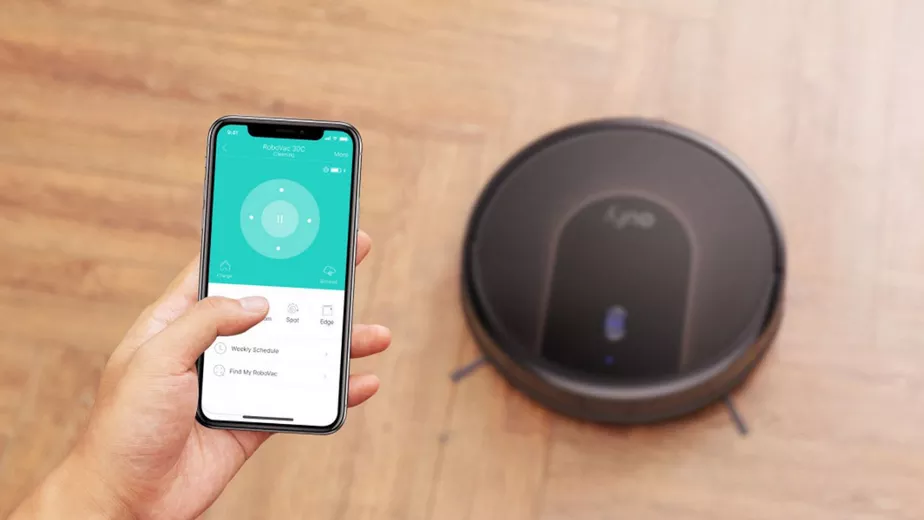
Robot vacuums behave like true companions in household chores. They have a compact design and can clean up dust and other dirt, with smart sensors that identify the dirtiest areas, guide their movement and prevent collisions. You can also set cleaning routes and schedule cleaning for specific times.
3. Connected air conditioner
Another option is Wi-Fi-connected air conditioners. They can be controlled from your phone, from anywhere, which makes it easier to cut expenses and to get the room ready before the user gets home, for example.
The settings go beyond turning it on or off: they also include a timer, airflow direction, etc. It is also possible to monitor the room and turn the unit on automatically.
4. Smart faucet
Smart faucets are useful for saving a very important and scarce natural resource: water. With the help of the system, you can lower consumption by shutting off the water when nobody is using it, and reduce usage for the sake of efficiency.
They also let you monitor and see the amount of water used, as well as blend different temperatures according to the weather and how warm or cold it feels, which means more comfort.
This tool is very important when it comes to sustainability. Once resources are saved, there is less impact on the planet, and people feel satisfied that they are doing their part to care for the environment.
5. Phone-controlled locks
When it comes to security, there is an interesting solution: phone-controlled locks. This is already a reality in cars, and it represents an incredible advance in protection. In homes, this technology prevents the problem of forgetting to lock the house, with remote control that makes it easy to keep track of the situation.
6. Automatic irrigation
For houses with a garden, another interesting option is automatic irrigation. The system's sensors detect when the garden needs water, and the software itself turns on the irrigation automatically, all without the need for human intervention.
7. Virtual assistant
Virtual assistants are already quite popular today, and it is a trend that will stay relevant in the future. Technologies such as Google Home and Amazon's Alexa help handle everyday chores in a practical and efficient way. With voice commands, people can get these systems to carry out specific tasks, such as playing a song or looking something up on the internet.
The interesting thing is that these systems can learn and improve, becoming more intelligent over time. This way, you can train the software with your most common requests and get a useful, efficient assistant for any activity.
This learning took a leap with generative artificial intelligence. In February 2025, Amazon announced Alexa+, which converses much more naturally, and it arrived in Brazil in early access in June 2026. At the end of 2025, Google began replacing Google Assistant with Gemini on Nest speakers and displays, also in early access; as of October 2026, however, Brazil and Portuguese were not yet on the list of supported countries and languages.
Once again, the focus is on offering comfort to users, simplifying tasks that are already common even further. By skipping typing, for example, you can save seconds and focus your attention on other, more important tasks.
One piece of news from the time this article was written was the launch of the Google Nest Mini in Brazil, on November 11, 2019. It is a smart speaker that controls other devices. It comes with Google's virtual assistant and lets you listen to news and music and even watch series on TV, through its integration with Chromecast.
This version added a new speaker, with better bass, and a new microphone. Chromecast, on the other hand, has been discontinued: in 2024, Google ended production and replaced it with the Google TV Streamer, and casting video from your phone to the TV continues on TVs with Google Cast.
New home technologies are a market that is already very strong but still expanding, which means it has a lot to offer in the coming years and decades. With that in mind, it is essential to always stay up to date on what is emerging, and to understand the particulars and real benefits of each new tool.
When choosing, it is worth preferring devices compatible with Matter, the standard launched in 2022 so that devices from different brands work together in the same home.