May 18, 2023, 3 min read, by Vinicius Bastos
Double-Depth 4x2 Wall Box: How to Make One for Automation
Double-depth 4x2 or 4x4 wall box: how to make one by joining two electrical boxes so the automation module fits behind the switch. With video.
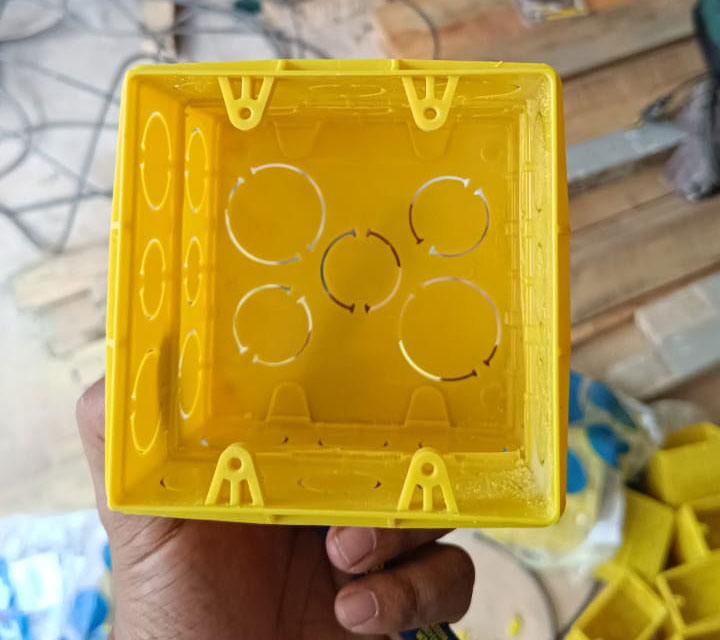
Preparing the house for automation is the secret to well-executed projects, and one of the steps is using double-depth boxes.
What is a double-depth 4x2 box?
It's the 4x2 electrical box, the box recessed in the wall that holds the switch or outlet, with twice the depth. It's made by joining two plastic boxes, and the extra space lets the automation module fit behind the switch, along with the wires.
With double boxes, you install the modules with room to spare, which makes the job easier and improves the quality of the installation.
The same idea applies to the 4x4 box, the square one, which takes plates with more buttons. Both names come from their measurements in inches: 4 by 2 and 4 by 4.
Use only plastic boxes: metal ones block the modules' radio signal.
How to make a double-depth box
Brenner Matheus posted this video in the students' group showing how to make a double-depth box.
It's very simple to do, but he shares a few tips in the video:
In addition to the double-depth boxes, it's essential to run the neutral wire to every box, or the second phase if the location is 220 V with no neutral.
The modules need power to work, and it comes from the line supply (phase + neutral).
For the rest of the preparation, see the series How to prepare your home for automation.
Why not use "no-neutral" modules?
With some types of load, such as incandescent bulbs, the neutral "passes" through the load and reaches the module through the switch leg.
If you measure the voltage between the bulb's switch leg and the phase, you'll find voltage.
That way, these "no-neutral" devices are powered by the phase and by the neutral that comes back through the load's switch leg.
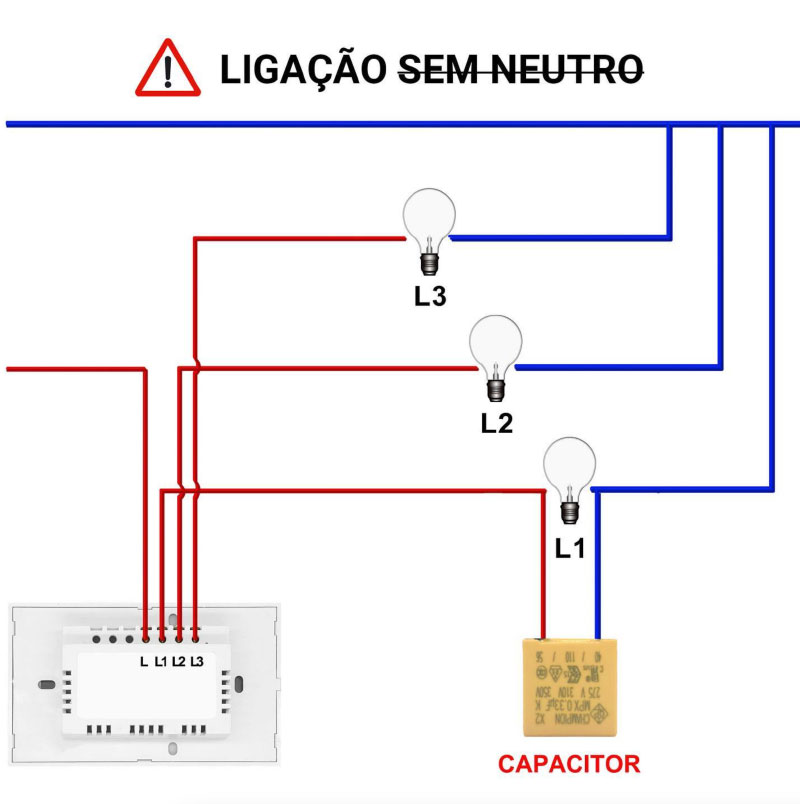
In theory it works, but in practice it's very different.
If the load doesn't "pass" the neutral properly, you'll need to install a capacitor in parallel with the load to make sure the neutral reaches the switch leg.
And this causes problems most of the time.
In some cases, after a period of use or as the bulb sockets oxidize, the neutral doesn't reach the switch leg at full strength, which results in lower voltage and, as a consequence, a malfunctioning device.
In other cases, the capacitor causes problems in the load, especially if the bulb is LED, which is very sensitive to electrical fluctuations and noise.
For these reasons, always choose devices and modules that use a neutral.
And remember: when running the neutral to the module, if there's a GFCI installed, don't use the neutral from the outlet circuit; use the lighting neutral, so that the GFCI doesn't trip.
What if the house is already finished?
If you can't replace the box, there are two options: install the module in the drywall ceiling, near the light fixture, or replace the switch with a smart switch, which doesn't require a double-depth box. To decide between the two, see smart switch or automation module.