March 23, 2020, 5 min read, by Vinicius Bastos
What Are the Most Common Smart Home Gadgets?
Smart locks, fire detectors, bulbs, smart hubs and voice assistants: the most common smart home gadgets and how to use them.
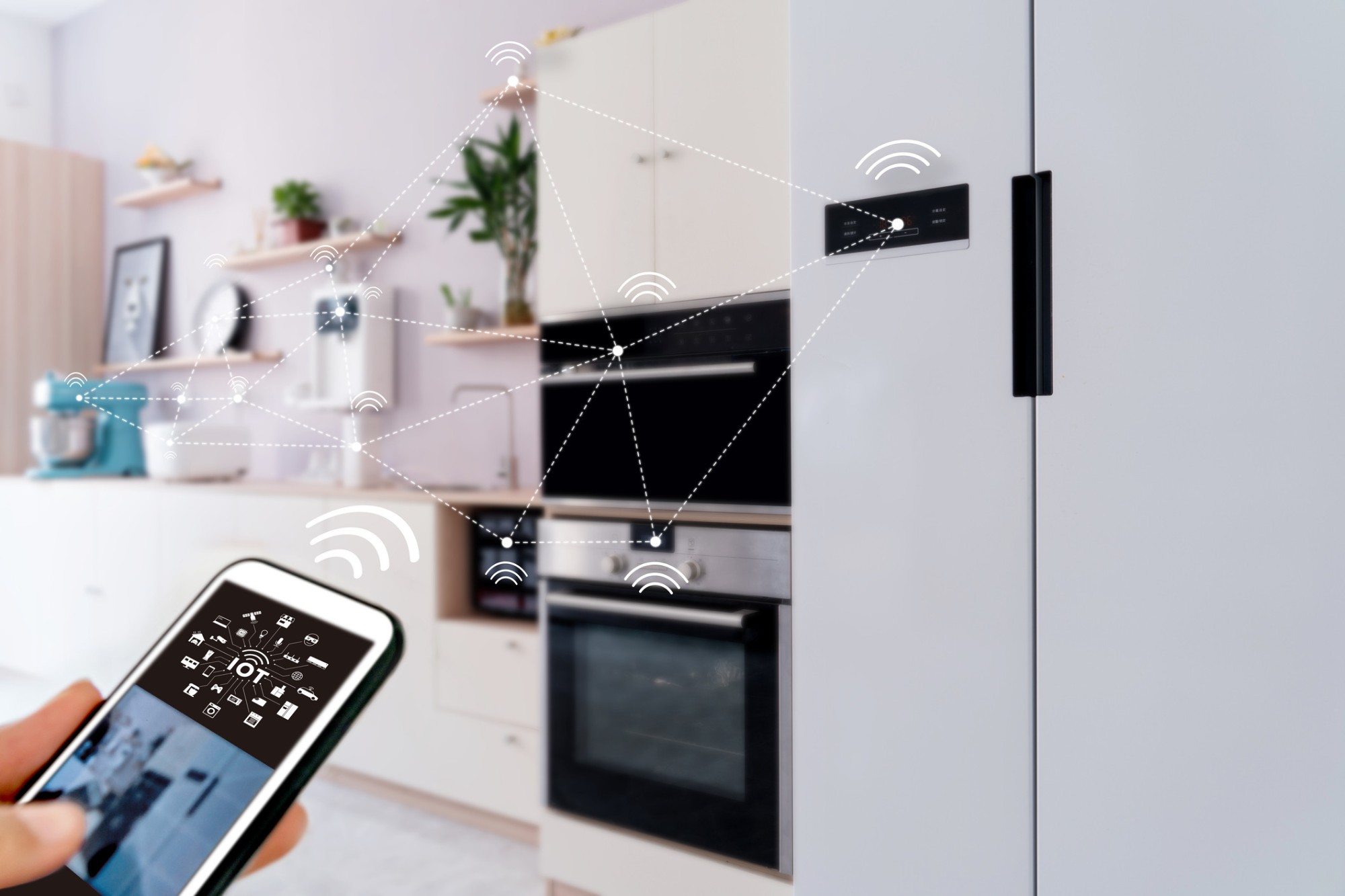
The term gadget has been part of our vocabulary for some time, but even so, many people do not know exactly what it means. Have you ever stopped to think that it could be something quite simple?
That is right: gadgets are nothing more than electronic devices used every day to make our increasingly hectic routine easier. They can be anything from a smartphone to virtual reality glasses, a very wide range of products!
For a more precise explanation, we can use the dictionary definition, since it is a word that has been incorporated into Portuguese, like other foreign words. According to the Priberam dictionary, a gadget is a "device or computer application that proves useful for a given task". We can take the task, in this case, to be home automation.
In this article, we present the most common smart home gadgets. Read on to the end!
What are the most used smart home gadgets?
The most common ones in smart homes are those related to security and lighting control, smart hubs, voice assistants and smart locks. Below, we talk about each one in more detail!
Smart lock
Smart locks are a way to control the door from a smartphone or tablet, by biometrics and even with presence sensors. There are models for different door types and sizes, so check compatibility with yours before buying. It is one of the ways to make your home more secure.
In Brazil, you can already find brands such as Kaadas, Samsung, Nice and Yale, among others. They work by passcode, biometrics, RFID card or app, with Wi-Fi, Z-Wave or Zigbee communication, depending on the model. So it is a good idea to research and see what best fits your case.
Fire alarm detector
A smart fire detector connects to the Wi-Fi network and sends alerts to your smartphone, even when you are away from home. It is ideal for home safety and for preventing bigger accidents that put the lives of residents and neighbors at risk.
Before buying, choose a model that works in the same app or with the same hub as your other devices, so that the alarm can, for example, turn on the lights along the way to the exit.
Smart Bulbs
Smart LED bulbs are great for helping save energy, since you can control them from your smartphone. Another advantage is changing the color of the light to make the room more comfortable.
Today there are many options on the Brazilian market, from well-known brands such as Positivo, Philips and Geonav. In general, they also work with voice assistants such as Amazon's Alexa and Google Assistant.
Smart Hubs
A smart hub works like a universal remote: with it, you control many devices in the home by phone or by voice. Infrared (IR) hubs learn the commands from the remote controls of the TV, the air conditioner and the sound system, and Zigbee hubs connect the sensors, locks and modules that do not use Wi-Fi. You can even control other devices from the TV itself. Very handy!
Brands of these hubs include Broadlink and Positivo, and many work with Amazon's and Google's voice assistants. See, for example, how to set up the Zigbee IR Hub.
Voice assistants
You can already have a voice assistant in your home! In Brazil, there are already Amazon's Alexa and Google Home. With them, you can control the devices in your home, check your schedule for the day, get the weather forecast and even have a conversation.
The assistants are getting versions with generative artificial intelligence, which understand more natural requests: Alexa+ arrived in Brazil in early access in June 2026, and Google is replacing Google Assistant with Gemini on Nest speakers and displays, in other countries for now.
Before buying, compare prices and see how each device works.
Which of them can be adapted to your home, and how do you use them every day?
All the devices mentioned above can be used in your home and are adaptable, as long as you have a good-quality Wi-Fi network.
Not only these devices, but every other smart device can be adapted to a home; so look for the ones that best meet your needs.
You can control them from your smartphone, where the apps are. Just follow the instructions to make them work perfectly and in harmony with your other devices.
How do you tell a useful gadget from one that is not so useful?
First, you need to identify which gadgets will be useful in your daily life and assess how much you need them to make your routine easier.
We know they all serve that purpose, but if you are still a beginner on the subject, it is worth starting by investing in low-cost devices, such as bulbs. If you want to prioritize one area of your home, such as security, you can invest in locks and cameras.
What is useful to you or not depends on your priorities, on how much automation you want in your home and on how much you can spend. So even that depends on your decisions and needs!
It is important to remember that installing these gadgets can be a lot of work, so consider whether you need to hire specialists to do the job for you.
Should I have more than one device at home?
The answer is yes, since products on their own do not make much of a difference when it comes to automating your home.
You can start making your home integrated and automated little by little. Today there are new technologies worth having at home, and you will not regret it!