February 28, 2020, 8 min read, by Vinicius Bastos
Automation in Daily Life: 10 Examples That Make Life Easier
10 examples of automation in daily life (turning everything off as you leave, opening curtains from bed, gas alerts) and the benefits of home automation.
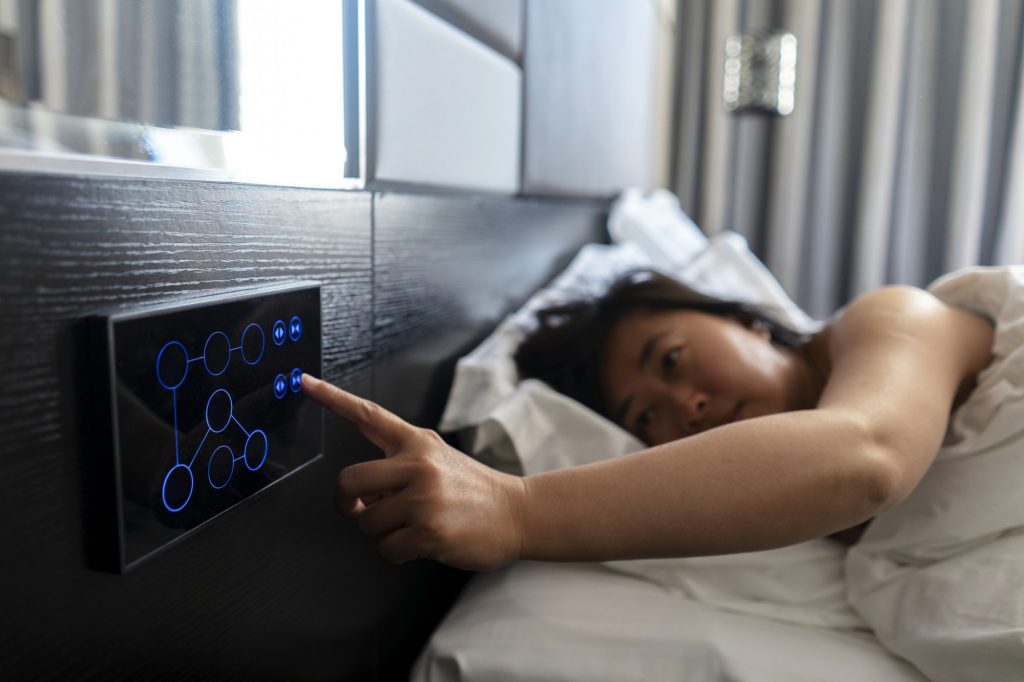
Automation in daily life can be seen in many areas, whether at home, at work, or in other activities, such as paying a bill on a card machine, using an ATM at the bank, or making a bank transfer on your smartphone. With it, you can enjoy a more functional and easier routine, in which life's chores become simpler, more practical, faster, and safer.
At home, for example, you can turn on the air conditioning while you're still at work, so the rooms are already at a pleasant temperature when you arrive. Another option that makes life more comfortable is turning off the lights and lowering the curtains at bedtime without having to get out of bed.
So it's well worth taking advantage of this kind of convenience that automation offers, because you'll be able to control and run many features, not only for more comfort but also so that you and your whole family can enjoy more security.
Interested and want to know more about automation in daily life? Then read this article and get your questions answered right now!
1. Turn everything off when you leave home
You know when you leave the house in a hurry and aren't sure whether you turned off all the electronic devices, like the TV in the living room, the bedroom lamp, the kitchen oven, and so on? With these devices automated, you can control them from other devices, such as a smartphone, laptop, or tablet.
So all you need to do is check your smartphone, for example, to make sure everything is properly off. That way, you can relax while you're out, free of worry, knowing that everything at home is safe and not wasting electricity.
Even better: a "Leaving home" scene turns everything off at once, with a single command on your phone or a button next to the door.
2. Trigger scheduled scenes based on the time of day
You'll be free to schedule many automated features in your home, depending on your needs and lifestyle. For example, if you like to wake up at 7 a.m. every day, you can schedule the coffee maker to start brewing half an hour earlier (all it takes is a smart plug and a coffee maker with a mechanical on/off switch, which starts working again when it gets power). Another option is to schedule the air conditioning to turn on every day 1 hour before you get home. That way, when you walk in, your home will already be at a pleasant temperature.
3. Control the curtains automatically
Automation is a great resource for anyone looking for more comfort and convenience in their daily routine. An excellent way to use it at home is curtain control.
That way, you can open them when you wake up without getting out of bed, adjust them to the amount of natural light you need during the day, and close them whenever necessary. All without having to get up. After all, you just trigger the programmed command.
4. Get rid of keys with a biometric lock
One way to make your home's security even more effective is a biometric lock. With it, you just register the biometrics of everyone who lives in the house, so they all have the freedom to come home whenever they want, without bothering anyone.
This is certainly a great feature for anyone who always forgets or loses their house keys, right? Many models also open with a passcode, a card, or the app, which makes it easy to let in guests and service providers. It's worth noting that this type of automation can also be installed in apartment buildings and residential complexes, bringing convenience and more security to everyone who lives there.
5. Monitor and record footage in the cloud for more security
You can set up an automated security system with cameras that monitor people coming and going at your front door. The footage is stored in the cloud, which gives you security if something goes wrong. For example, if someone tries to get into your home, you just access the cloud, review the footage from the day of the incident, and prove what happened.
6. Get notified when someone arrives, leaves, opens a door, or uses a device
With automation, you can have full control over who comes in and out of the house, which doors are opened, which devices are used, and so on. This kind of control is essential for the peace of mind of working parents who leave their children at home, because it gives you access to important information. You'll see whether everyone is home, whether someone has left, whether the little one is watching TV during homework time, and more.
7. Get notified of smoke, gas, or water leaks
A great advantage of automation lies in control and savings, whether of electricity, gas, or water. With that in mind, you can, for example, receive notifications if there's any kind of leak or smoke. That way, the homeowner can take the necessary steps to fix the problem and, as a result, avoid financial losses and possible dangers to the safety of the people who live there.
8. Turn off your company's air conditioning when no one is using it
Besides using automation at home, you can also apply it at your company. For example, you can turn off all the air conditioners when they're not being used. With this kind of control, you can cut electricity costs and encourage conscious energy use, without waste.
9. Get rid of remote controls and turn on all your equipment by voice
It's common, especially if many people live in the house, to lose the remote controls for the TV, the air conditioner, and the stereo, right? A useful solution to this kind of problem is to connect all the equipment so it responds to your voice. Then you just say the programmed commands to control each device.
Devices that use infrared remotes, such as the TV and the air conditioner, are then controlled by an IR hub integrated with Alexa or Google. And you can go beyond voice: with Q-IA, QA's assistant, you control lights, curtains, air conditioning, and scenes by sending a WhatsApp message.
10. Use the features of voice assistants
There are many voice commands you can use for different everyday tasks, such as making a call, checking whether the forecast calls for rain or sun, checking the week's schedule, estimating the travel time for a route at a certain time of day, and so on. And all without having to pick up your phone to dial a number or open a web page.
And the assistants are getting smarter. In 2025, Amazon announced Alexa+, with generative artificial intelligence, and Google began replacing Google Assistant with Gemini on its smart speakers and displays. The promise is a more natural conversation, without having to memorize commands. In Brazil, Alexa+ was in early access in July 2026, according to Amazon, and Gemini for Home had not yet arrived in Portuguese as of October 2026, according to Google.
Other examples of automation in daily life
Outside the home, automation is in many things that work on their own: the supermarket door that opens as you approach, the elevator, the traffic light, the ATM, the parking lot barrier, and electronic toll collection through the car's tag. Inside the home, many things already come automated from the factory, such as the electric gate, the robot vacuum, the washing machine with its wash programs, and the garden irrigation timer.
What the smart home adds is the conversation between these devices: the gate can send a notification to your phone when it opens, the robot vacuum can start cleaning when everyone leaves the house, and a single scene controls the lights, the curtains, and the air conditioning.
What are the benefits of home automation?
The main benefits of home automation are more security, energy savings, comfort, and free time. With an automated home, you keep track of everything on your phone, avoid waste, and let the house handle the repetitive tasks.
Security: cameras, digital locks, and sensors notify your phone of what's happening, and the house can simulate someone being home while the family is traveling.
Savings: lights and air conditioning turn off when a room is empty, and meters show how much the house consumes. How much you save depends on how much is wasted today.
Comfort: scenes, schedules, and voice commands do the job of several remote controls and switches.
Time: what used to take a walk around the house, like checking doors, lights, and devices, becomes a tap on your phone.
Independence: older adults and people with reduced mobility control the lights, curtains, and air conditioning by voice or from their phone.
See how automation can change the way you live your routine, bringing more comfort and convenience? It's also important to point out that, for automation to be installed correctly and safely, you need qualified professionals who specialize in the field. That way, you can ensure quality service that leaves the customer very satisfied.
Now that you understand how automation works in daily life, how about sharing this article on your social media? That way, more people can access the valuable information in this content!