March 23, 2020, 6 min read, by Vinicius Bastos
How to Set Up Home Automation: What It Is and How to Start
How to set up home automation: what it is, how it works, what you can automate, where to start, how to prepare the build and how to choose an integrator.
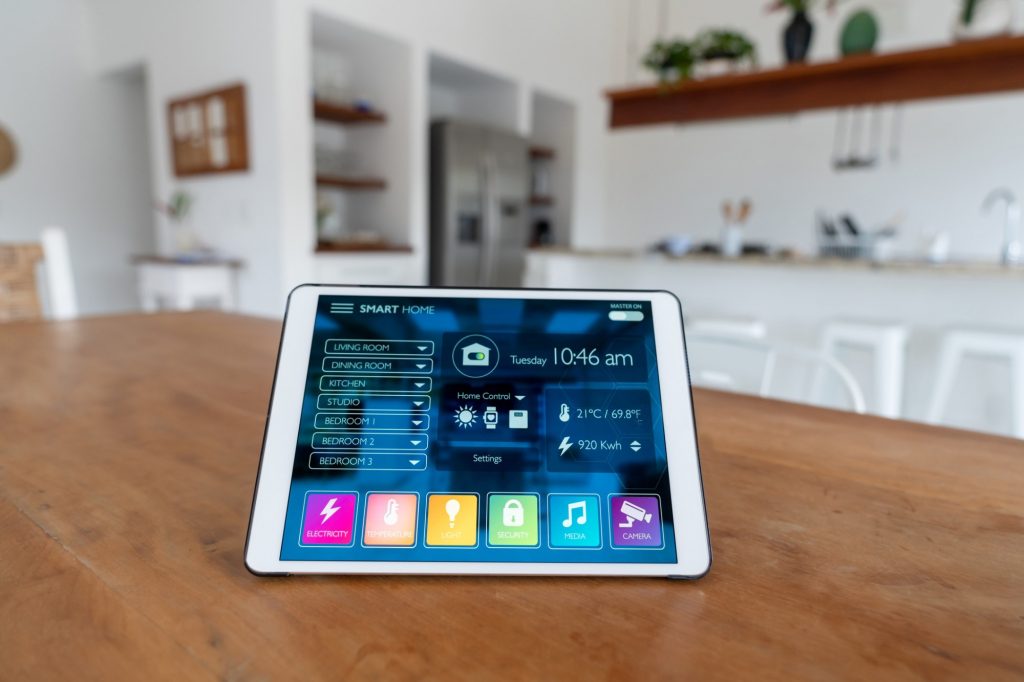
Knowing how to set up home automation is one of the biggest concerns when we think about getting more comfort, savings and security in our home. However, it is important to note that this process needs to be carried out by qualified technicians. With that in mind, knowing how to choose the right professionals for each part of home automation is essential for the project to succeed.
Besides choosing the specialized professional, you need to research the system that best meets the owner's needs, since new technologies make it possible to connect many devices to a central controller.
In this article, we will explain what home automation is and how to succeed with it, by selecting an ideal system and knowing how to choose the best professionals to carry out these specialized services. Keep reading to learn more!
What is home automation?
Home automation is the use of technology so that the lighting, curtains, air conditioning, locks, cameras and other equipment in the home work on their own or are controlled from a single place, by phone, by voice or by buttons on the wall. The goal is to gain comfort, security and savings without complicating the routine of the people who live there.
Turning an ordinary house into an automated environment means being able to enjoy the latest technology for convenience and security, since home automation systems can operate curtains, household appliances, lighting, security controls and more.
Smart home automation lets you manage, schedule and monitor many events remotely. To do so, the devices need to be connected to a central controller (hub) or to the home's Wi-Fi network, which is connected to the internet.
Control can be done through several interfaces, such as a smartphone, voice assistants and touchscreens. The functions are programmed in a customized way to meet each user's needs, such as sustainability, security and comfort.
How home automation works
Home automation works with three pieces. Sensors detect what is happening in the house (presence, an open door, temperature, a leak); the hub decides what to do, according to the scenes, schedules and rules you have set up; and actuators, such as modules, smart switches and motors, carry out the action. These components talk to each other through communication protocols such as Wi-Fi, Zigbee and Bluetooth.
An example: you trigger the "Movie" scene, and the blinds close, the lights go off, the home theater turns on and the air conditioning goes to the right temperature. In the same way, the outdoor lights can turn on by themselves at dusk, and a leak sensor can shut off the water valve and send an alert to your phone.
How to set up home automation
Before starting home automation, it is important to consider that every case is different, since many homes are still in the design phase, others are under construction or renovation, and others are already finished.
Depending on the phase the house is in, the automation possibilities can increase or decrease, for example regarding the use of cables or of wireless systems such as Wi-Fi, Z-Wave and Zigbee. Since 2022, there has also been the Matter standard, which runs over Wi-Fi, Ethernet and Thread and makes it easier for devices from different brands to work together. In general, the step-by-step process for developing a customized project needs to consider the following aspects:
defining the systems to be integrated, such as lighting, security, video, audio, blinds, temperature control, solar energy and others;
determining which rooms should be automated;
visiting a showroom to see and evaluate the latest solutions;
surveying the costs, based on a quote that fits the budget available and the needs established;
requesting a design with all the infrastructure needed to install the automation system;
checking the work on site, to make sure the company in charge is closely following each stage of the installation.
House under construction or finished house?
During construction or renovation, prepare the infrastructure: a neutral wire in every switch box, boxes with room for the automation modules, conduit for network and audio cables, and power points for motorized curtains and cameras. See the checklist in how to prepare your home for automation. In a finished house, wireless devices take care of most of it without breaking walls: modules behind the switches, an IR hub for the air conditioning and the TV, battery-powered sensors and Wi-Fi cameras.
Where to start
The ideal is to start automation with the simplest controls, the ones that are easiest to install and configure, as is the case with lighting. However, automations can follow other priorities, such as security, entertainment, convenience and practicality. Below are some suggestions ranging from the simplest installations to the most sophisticated (there are more examples in 9 ways to automate your home).
Lighting
Several types of systems that provide this control can work with a timer, letting the lights turn on and off at different times of the day, which saves energy and provides the security of a lit house, even when nobody is home.
Another easy lighting automation option uses app-controlled bulbs. This system lets you control light intensity and color, and all you need to do is connect them to the home's wireless network. Just be careful: since they need to stay powered at all times, smart bulbs work better in table lamps and light fixtures than on circuits with a regular switch.
Entertainment
Entertainment systems, such as TVs, home theater and speakers, can connect to the home network and be controlled by phone, by voice or by scenes. All it takes is a good wireless network and setting up the devices.
Security
Installing cameras, alarms and security sensors is an increasingly necessary form of automation. Cameras can be connected to the network so the footage can be viewed from a server on the internet or an app. Smoke detectors, sprinklers, fire alarms and other devices that help keep the home safe can also be included.
Cleaning
After automating the lighting and sound in the house, the next step can involve cleaning. There are several types of robot vacuums that can be scheduled by time; you just need to pick the one that best meets your needs.
Hiring qualified professionals
To get the most out of your investment in home automation, it is essential to hire trustworthy professionals who are specialized and experienced in integration. This is an essential precaution that can prevent many worries and even losses.
The professionals need to be able to offer everything from a basic infrastructure design to equipment specification, installation and final programming, since these are stages that require refined technical knowledge.
How to choose the best professionals
One of the most practical, fastest and safest ways to find a good professional is through the QA website. In My Project, you describe what you want in your home, and QA recommends an integrator in your area. You can also check the partner directory, with the integrators selected by QA.
For professionals who want to work in automation, QA offers QA Pro, with a course and a kit to learn everything from design to handover.
As we have seen, knowing how to set up home automation is important to ensure proper, efficient installations, avoiding worries and losses. To do so, you need to plan the rooms you want to automate, including the equipment and apps needed, and hire qualified professionals, such as the integrators recommended by QA.